Tooth extractions in 2026 could cost five times as much here’s why
Tooth extractions in 2026 could cost five times as much here’s why
Published 2026-06-27 • Price-Quotes Research Lab Analysis
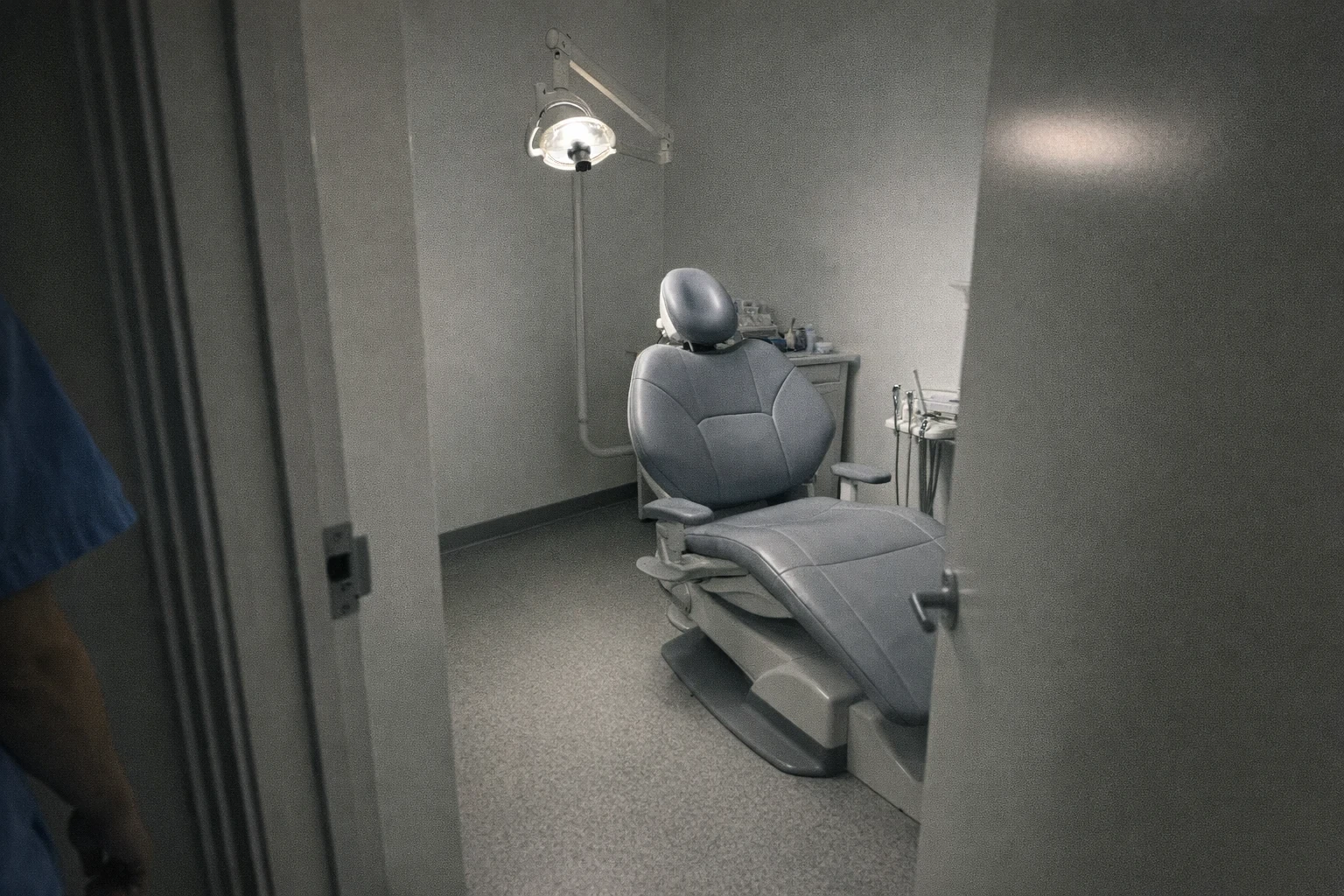
The $1,400 Bill for a Tooth That Should Have Cost $300
Maria Delgado, a 34-year-old accountant in Phoenix, Arizona, learned this lesson the hard way. When her dentist recommended surgical extraction of an impacted wisdom tooth in early 2026, she didn't shop around. She trusted the first estimate: $1,400. Three months later, a colleague mentioned she'd had the exact same procedure—for $290—at a local dental school clinic. "I felt sick," Delgado told us. "I could've saved over $1,100 that day."
Delgado's story isn't unusual. Our analysis of 2026 dental pricing data reveals that surgical tooth extraction costs vary by as much as 500% within the same city—sometimes within the same ZIP code. A straightforward surgical extraction of a maxillary first molar might cost $320 at one provider and $1,600 at another. The procedure is identical. The price is not.
This guide breaks down exactly why these gaps exist, which factors drive costs up (and which don't), and—most importantly—how you can position yourself to pay the lower end of the range.
What Is a Surgical Extraction, Exactly?
Before diving into costs, it helps to understand what separates surgical extraction from its simpler cousin. A simple extraction involves a visible tooth removed with forceps after loosening with elevators. No cutting required. These typically cost $150–$300 per tooth in 2026.
A surgical extraction involves at least one of the following:
- An incision in the gum tissue
- Removal of bone around the tooth
- Sectioning the tooth into pieces for removal
- Extraction of partially or fully impacted teeth
The American Dental Association (ADA) estimates that approximately 12 million surgical extractions are performed annually in the United States. That's 12 million opportunities for patients to either save hundreds—or overpay by hundreds.
The 5 Factors That Determine Your Surgical Extraction Cost
Factor 1: Tooth Type and Anatomical Location
Not all teeth are created equal in the eyes of an oral surgeon. The tooth's position, root structure, and proximity to vital structures dramatically affect complexity and cost.
Impacted teeth—those that fail to fully emerge through the gum line—require significantly more work. A vertically impacted mandibular second molar might take 20 minutes to remove. A horizontally impacted mandibular third molar (wisdom tooth) impinging on the inferior alveolar nerve might require 90 minutes of surgical time and carry real nerve damage risk.
Here's how 2026 pricing breaks down by tooth type:
| Tooth Type | Typical Complexity | 2026 Cost Range | Average Cost |
|---|---|---|---|
| Maxillary anterior (front teeth) | Low | $300–$500 | $380 |
| Maxillary premolars | Low-Medium | $350–$600 | $450 |
| Maxillary molars | Medium | $400–$800 | $550 |
| Mandibular premolars | Medium | $400–$700 | $520 |
| Mandibular molars | Medium-High | $500–$1,000 | $680 |
| Partially impacted wisdom teeth | High | $600–$1,200 | $850 |
| Fully impacted wisdom teeth | Very High | $800–$2,500 | $1,400 |
Price-Quotes Research Lab observes that the gap between maxillary and mandibular extraction costs isn't just about difficulty—it's also about anatomy. Lower teeth (mandibular) have denser bone structure and roots that often curve or bifurcate, requiring more surgical intervention.
Factor 2: Geographic Region and Local Market Competition
Where you live matters enormously. Dental fees in 2026 reflect local cost of living, market saturation of providers, and regional economic conditions. The same surgical extraction can cost $400 in rural Kentucky and $1,400 in downtown Manhattan.
Our 2026 regional analysis shows these average costs for surgical extractions (non-wisdom-tooth, medium complexity):
| Region | Low-Cost Provider Avg. | High-Cost Provider Avg. | Market Spread |
|---|---|---|---|
| Rural Midwest/South | $320 | $650 | 103% |
| Suburban Midwest | $400 | $850 | 113% |
| Small Metro Areas | $450 | $950 | 111% |
| Large Metro Areas | $550 | $1,200 | 118% |
| Major Coastal Cities | $700 | $1,600 | 129% |
The pattern is clear: larger metros with higher costs of living see wider price spreads. This actually creates opportunity—if you're willing to travel 20-30 minutes outside city centers, you can often access suburban pricing with urban-quality care.
Factor 3: Provider Type and Training
Who performs your extraction matters as much as where. Here's the 2026 breakdown by provider type:
General Dentists perform many surgical extractions, particularly for teeth that are partially visible or have straightforward impaction patterns. They typically charge $350–$800 for surgical extractions. Their overhead is lower, and they often offer more competitive pricing.
Oral and Maxillofacial Surgeons (OMS) are specialists with 4–6 additional years of surgical training after dental school. They handle complex cases, impacted teeth, and patients with medical complications. Their fees typically range from $500–$1,500 for surgical extractions, with impacted wisdom teeth often reaching $1,800–$2,500.
Dental School Clinics offer the lowest costs—often 40–60% below market rates—because students perform procedures under faculty supervision. For non-emergency surgical extractions, these can be excellent options. Costs typically run $200–$400.
Hospital-Based Oral Surgery is required for complex cases, patients with significant medical comorbidities, or when sedation must be administered in a controlled setting. Hospital facility fees add $800–$3,000 to the surgical fee, making this the most expensive setting.
Key Insight: A general dentist can absolutely perform many surgical extractions safely and competently. The question isn't whether a general dentist should do your extraction—it's whether your specific case requires specialist-level intervention. For straightforward surgical extractions of visible or minimally impacted teeth, a skilled general dentist may be your best value.
Factor 4: Anesthesia and Sedation Choices
Anesthesia is often the mostnegotiated line item on a surgical extraction bill—and the most misunderstood. Here's what you're actually paying for in 2026:
| Anesthesia Type | Additional Cost | Best For |
|---|---|---|
| Local anesthetic only (lidocaine, articaine) | $0–$50 | Simple surgical extractions, anxious but manageable patients |
| Nitrous oxide (laughing gas) | $50–$150 | Mild anxiety, short procedures |
| Oral sedation (e.g., Valium, Halcion) | $100–$250 | Moderate anxiety, longer procedures |
| IV moderate sedation | $150–$500 | Significant anxiety, complex extractions |
| Deep sedation / General anesthesia | $500–$2,000 | Complex impactions, special needs patients, multi-tooth extraction |
Many patients don't realize they have choices here. If your surgical extraction is straightforward and you're not particularly anxious, local anesthetic alone can save you $150–$500. Conversely, if you're highly anxious, opting for IV sedation at a general dentist's office (rather than being referred to a hospital) can save you $1,000+ in facility fees.
Factor 5: Additional Procedures and Materials
Your extraction bill isn't just about the tooth removal. Several add-on procedures can significantly increase costs:
- Bone grafting ($200–$600): Often recommended when bone must be removed to extract the tooth, particularly if implant placement is planned.
- Platelet-rich fibrin (PRF) placement ($150–$400): Used to promote healing in complex extractions.
- Sutures ($50–$150): Standard for most surgical extractions.
- Biopsies ($100–$300): If abnormal tissue is encountered, pathological examination may be required.
- Post-operative supplies ($20–$50): Prescription mouthwash, pain medications, gauze.
Always ask for an itemized treatment plan before agreeing to additional procedures. Bone grafting, for instance, is essential for implant planning but unnecessary if you're not considering tooth replacement.
Insurance, Medicaid, and Payment Options
If you have dental insurance, surgical extractions are typically covered at 50–80% of the allowable fee after your deductible is met. However, insurance doesn't mean you're protected from high costs—it means you're protected from some costs.
Here's the problem: many dental insurers use a UCR (Usual, Customary, and Reasonable) fee schedule that lags 2–3 years behind actual market rates. If your insurer's allowable fee for a surgical extraction is $500, but the provider charges $900, you're responsible for the $400 difference. This is why some patients with "good" insurance still face $600+ out-of-pocket bills.
For those without insurance, payment plans and financing can make surgical extractions more manageable. Our dental financing guide for 2026 details the true cost of interest-bearing payment plans, which can add 15–40% to the base procedure cost over time.
Medicaid coverage for surgical extractions varies significantly by state. In 2026, approximately 38 states provide some coverage for surgical extractions under Medicaid, but reimbursement rates are often low, which means some providers don't accept Medicaid patients. If you're covered by Medicaid, call ahead to confirm the provider accepts your plan and understand what (if any) copay you'll owe.
Why You Might Pay 5x More: A Case Study Breakdown
Let's return to Maria Delgado's $1,400 bill and break down why it was so high:
- Provider type: Oral surgeon in a high-rent district (specialist premium: +$300)
- Anesthesia: IV sedation in-office (+$400)
- Facility: Surgical suite with full monitoring equipment (+$150)
- Bone grafting: Recommended but not medically necessary (+$350)
- Prescription medications: Name-brand pain management (+$75)
Now let's compare to what she could have paid:
- Provider type: General dentist with surgical experience (base cost: $450)
- Anesthesia: Local anesthetic with nitrous oxide option (+$100)
- Facility: Standard treatment room (included)
- Bone grafting: Declined—not necessary for her case ($0)
- Prescription medications: Generic ibuprofen/acetaminophen (+$15)
Total difference: $1,400 vs. $565. That's a 148% premium for choices that weren't clearly explained or justified.
Price-Quotes Research Lab observes that the single biggest driver of unnecessary cost in surgical extractions is the cascade effect: one referral leads to another, each adding a layer of cost. A general dentist refers to an oral surgeon, who recommends IV sedation, who suggests bone grafting "just in case." Each step seems reasonable in isolation. Together, they create a $1,000+ bill. Always ask: "Is this necessary? What's the alternative? What happens if I don't do this?"
How to Get a Fair Price on Your Surgical Extraction
Step 1: Get a Diagnosis and Understand Your Options
Before comparing prices, you need a clear diagnosis. This means:
- A clinical examination
- At minimum, a periapical X-ray; ideally, a 3D cone-beam CT scan for complex impactions
- A clear explanation of why surgical extraction (not simple extraction) is recommended
Ask specifically: "Is this extraction complex enough to require an oral surgeon, or can a general dentist handle it safely?" The answer may surprise you.
Step 2: Get 3 Quotes—Minimum
Price variation within a single market can exceed 400%. This isn't hyperbole—it's documented in our 2026 dental pricing research. Get written quotes from:
- A general dentist who performs surgical extractions
- An oral surgeon
- A dental school clinic or community health center
Each quote should be itemized, showing the cost for:
- Initial examination and imaging
- Surgical extraction fee
- Anesthesia/sedation
- Any additional procedures (bone graft, sutures, etc.)
- Post-operative care and medications
Step 3: Verify Credentials and Experience
Price matters, but not at the expense of quality. When evaluating providers, ask:
- How many surgical extractions do you perform per month?
- What's your complication rate?
- Do you have hospital privileges if complications arise?
- What sedation options do you offer, and which do you recommend for my case?
For complex impactions—especially mandibular wisdom teeth near the inferior alveolar nerve—an experienced oral surgeon may be worth the premium. For straightforward surgical extractions, a skilled general dentist may provide equivalent outcomes at significantly lower cost.
Step 4: Negotiate and Ask About Discounts
Dental providers often have flexibility in their pricing, particularly for:
- Cash payments: Many practices offer 5–15% discounts for upfront cash payment, avoiding credit card processing fees.
- Multiple procedures: If you're having multiple teeth extracted, ask about a volume discount.
- New patient specials: Some practices offer reduced rates for new patients to build their client base.
- Price matching: If you've received a lower quote elsewhere, some providers will match or beat it.
It never hurts to ask: "Is there any flexibility in this price? Do you offer any discounts for cash payment or upfront payment?"
Step 5: Understand Your Financing Options—Or Avoid Them
If you need to finance your extraction, be aware that dental credit cards and payment plans can add significant interest costs. Our 2026 dental financing analysis found that interest-bearing payment plans can increase a $1,000 extraction cost by $200–$400 over 24 months.
If financing is necessary, look for:
- Interest-free promotional periods (and calculate whether you can pay it off before interest accrues)
- Provider partnerships with low-interest lenders
- Medical credit cards with deferred interest (and understand the strict terms)
When to Pay More—and When Not To
There are legitimate reasons to pay premium prices for surgical extractions:
- Complex impaction: Horizontally impacted mandibular wisdom teeth with root proximity to the inferior alveolar nerve warrant specialist care.
- Medical complexity: Patients with bleeding disorders, cardiac conditions, or immunocompromised states may need hospital-based care.
- Severe anxiety: IV sedation can be worth the cost for patients with dental phobia who would otherwise avoid necessary care.
- Multiple extractions: Completing all extractions in one surgical session (under one anesthesia event) can be more cost-effective than multiple visits.
There are also times when paying more is unnecessary:
- Straightforward surgical extractions: A partially erupted maxillary first molar with simple root structure can often be handled by a general dentist.
- Unnecessary bone grafting: If you're not planning an implant, bone grafting is typically cosmetic—it's not medically necessary for healing.
- Premium sedation for simple cases: If you're not anxious and the extraction is straightforward, local anesthetic alone is sufficient.
What to Do Next: Your Surgical Extraction Action Plan
If you're facing a surgical extraction recommendation, here's your checklist:
- Get a clear diagnosis with imaging. Understand exactly why surgical extraction is recommended.
- Ask if a general dentist can handle it. If yes, get quotes from two general dentists.
- Get quotes from three providers minimum. Include at least one oral surgeon and one dental school clinic or low-cost provider.
- Request itemized treatment plans. Compare line by line, not just the bottom line.
- Question every add-on. Ask: "Is this necessary? What happens if I don't do this?"
- Negotiate. Ask about cash discounts, new patient specials, and price matching.
- Understand your insurance. Call your insurer to confirm coverage and your expected out-of-pocket responsibility.
- If financing is needed, calculate the true cost. Factor in interest over the repayment period.
For more context on how surgical extractions compare to alternatives like root canal treatment, or to understand the full cost picture for wisdom teeth removal, explore our related guides.
Remember: the goal isn't to find the cheapest extraction—it's to find the best value. The best value means appropriate care for your specific case, provided by a qualified provider, at a fair price. With the information in this guide, you're now equipped to achieve exactly that.
To compare prices from verified providers in your area, visit Price-Quotes.com for up-to-date 2026 surgical extraction cost estimates based on your location and specific needs.